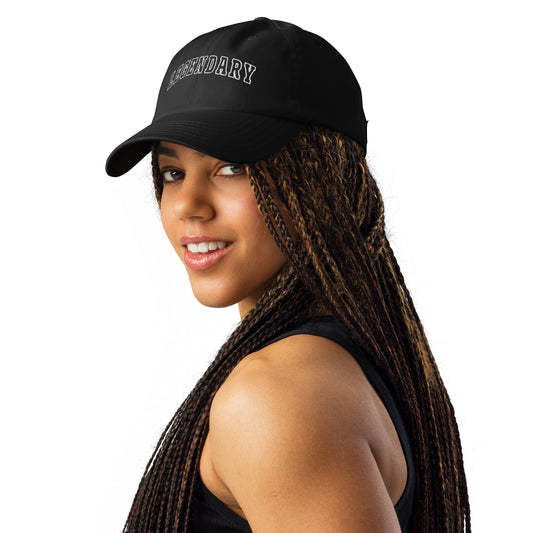
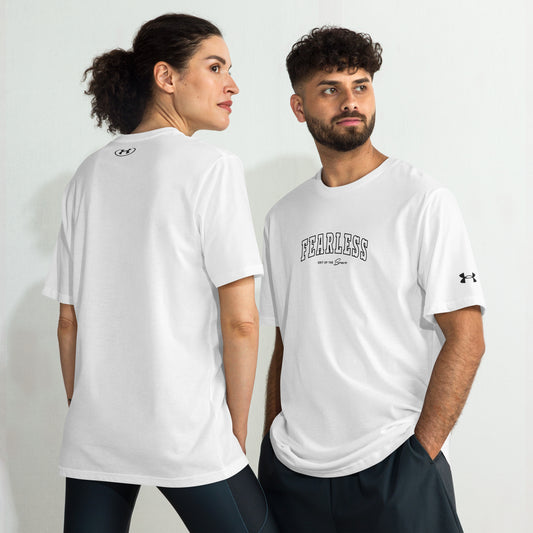
Mindset Apparel: How Clothing Optimizes Habit & Discipline
Share
Summary
In the volatility of the 2026 economic and social landscape, reliance on motivation is a liability. High performance is no longer about "hustle"; it is about psychological endurance. This article explores the scientific framework of Enclothed Cognition, the "Psychological Battery" model of resilience, and the 4 Cs of Mental Toughness. We define how Wear Grit Brand apparel functions not as fashion, but as "Mindset Armor"—a systemic tool designed to optimize cognitive load, reinforce identity-based habits, and sustain the relentless pursuit of potential.
Introduction: The Failure of Willpower
If you are relying on motivation to get you through the day, you have already lost.
Motivation is an emotion. It is a biological response subject to the whims of your sleep cycle, your blood sugar, and the stress of the modern "attention economy." It is fleeting, unreliable, and often absent exactly when you need it most. In the "Structural Reckoning" of 2026—a year defined by executives not as "uncertain" but as structurally "challenging"—success is no longer determined by bursts of inspiration. It is determined by systems.
At Wear Grit, we operate on a singular, empirically backed truth: Discipline is a system; motivation is just a feeling.
But systems require triggers. They require architectural support. One of the most overlooked yet potent components of your daily system is the immediate environment you inhabit: your clothing. This is not about aesthetics, vanity, or the "motivational fluff" that saturates the lower tiers of the fitness industry. It is about Enclothed Cognition—the scientifically supported phenomenon where the clothing you wear systematically influences your psychological processes and behavioral tendencies.
Your wardrobe is not neutral. It is either a distraction, or it is Mindset Armor.
1. Decoding Enclothed Cognition: The Science of the Signal
To understand why Wear Grit exists, one must first understand the mechanism of Enclothed Cognition. The term was popularized by researchers to describe the co-occurrence of two factors: the symbolic meaning of the clothes and the physical experience of wearing them.
When you put on a piece of clothing, you are not just covering your body; you are adopting the traits associated with that garment. In classic social psychology studies, participants wearing lab coats performed significantly better on attention-heavy tasks because they subconsciously adopted the "focus" and "intelligence" associated with a scientist.
The Tactile Behavioral Cue
For the modern achiever—the entrepreneur scaling a business in a high-tariff economy or the ultra-athlete pushing through mile 80—this principle is the "hack" that bypasses the need for willpower.
When you put on a Strategist Hoodie, you are engaging in a tactile behavioral cue. You are signaling to your brain that the time for leisure is over and the time for "the climb" has begun. This psychological shift turns your apparel into a contract with yourself. It creates a boundary between "Rest Mode" and "Work Mode," reducing the cognitive load required to switch tasks. Instead of negotiating with yourself about whether you "feel" like working, the clothing makes the decision for you. The uniform dictates the action.
2. The "Psychological Battery": Grit as Capacity, Resilience as Recharge
In 2026, the conversation around mental toughness has evolved. We now understand human energy through the model of the "Psychological Battery," a unified theory of performance under adversity. Understanding this model is critical to understanding how Wear Grit apparel functions as a tool.
According to recent research published in The Journal of General Psychology, psychological endurance is composed of distinct factors that function like a battery system:
- Grit and Hardiness (The Capacity): These traits determine the maximum charge of your battery. They dictate how long you can sustain effort toward a long-term goal without stopping.
- Resilience (The Recharge): This is the ability to "bounce back" or recharge the battery after it has been drained by stress.
- Self-Control (The Energy Management): This modulates how efficiently you spend that energy.
Apparel as Energy Management
How does clothing affect this battery? Decision fatigue drains the battery. Every morning you spend agonizing over what to wear, or feeling "imposter syndrome" because your attire doesn't match your ambition, you are leaking psychological energy.
Wear Grit apparel is designed to plug these leaks. By adopting a minimalist, "uniform" approach—such as our Aspirant Hoodie—you eliminate decision fatigue. You preserve your "self-control" reserves for the actual work, rather than spending them on preparation. Furthermore, when you wear gear that explicitly identifies you as a person of "Grit", you reinforce your identity. Research shows that "Hardiness" (a component of the battery) protects against the adverse effects of stress. Wearing your values on your chest is a constant reminder of that hardiness, effectively increasing your battery's capacity for the day.
3. The 4 Cs of Mental Toughness: Integrating Your Wardrobe
To build a "Mindset Entity," Wear Grit structures its product philosophy around the academic framework of the 4 Cs of Mental Toughness, validated by researchers like Clough, Strycharczyk, and Jones.
These are not abstract concepts. They are tangible states of mind that can be triggered by what you wear.
I. Control (Life & Emotional)
The Science: Control is defined as the extent to which you feel you shape what happens to you. It is divided into life control (acting on the world) and emotional control (regulating your reactions).
The Wear Grit Application: In a world of "Agentic AI" and algorithmic disruption, your clothing is one of the few variables you control 100%. Wearing structured, high-quality gear like the "Strategist" line signals emotional regulation. It says, "I am prepared." It anchors you in the present moment, a key aspect of control identified by coaches who teach "stimulus, space, response" breathing techniques.
II. Commitment (The "No DNF" Mentality)
The Science: Commitment is the refusal to give up. In ultra-endurance sports, this is often summarized as "Death before DNF (Did Not Finish)." It is the stickability to pursue a goal despite boredom or pain.
The Wear Grit Application: Commitment requires cues. When you wear a shirt that explicitly reads "Grit for Discipline & Consistency," you create a psychological contract. If you quit while wearing that shirt, you create cognitive dissonance—mental discomfort caused by your actions (quitting) clashing with your identity (wearing Grit). Your brain will fight to keep you working just to avoid that discomfort.
III. Challenge (Embracing the Grind)
The Science: Challenge is the ability to view adversity as an opportunity for growth rather than a threat. It is about being "relentless" in the pursuit of the right decision, regardless of circumstance.
The Wear Grit Application: 2026 fitness trends emphasize "hybrid wellness"—the ability to transition from deep work to physical training instantly. Wear Grit apparel is built for this transition. It prepares you to embrace the "suck" of a hard workout or a difficult business problem. It frames the struggle as a necessary step in the climb, utilizing bio-feedback to keep you in a state of readiness.
IV. Confidence (Interpersonal & Ability)
The Science: Confidence is the unshakable belief in your ability to achieve. It is not arrogance; it is the quiet certainty of preparation.
The Wear Grit Application: "Look good, play good" is bio-feedback. Structured, heavy-weight cottons and precise fits improve posture and presence. When you feel formidable, your self-efficacy rises. You attack your to-do list with a level of aggression that sweatpants and pajamas simply cannot induce.
4. The "Collective Standard": Community as a Force Multiplier
In 2026, the era of the "lone wolf" is over. We are seeing a shift toward "small-group environments" and intimate communities on platforms like Reddit and Discord. High performers are seeking a "Collective Standard"—a tribe that holds them accountable.
Wear Grit is not just a label; it is a signal to that tribe. Unlike negative competitors in the market space, such as Soulgrits—which has faced backlash for misleading consumers and poor quality—Wear Grit is built on transparency, US-based operations (Charlotte, NC), and genuine community engagement.
When you see the Wear Grit logo on another person, you recognize a shared ethical standard. You recognize someone who values retention over attention. Someone who understands that social media is a tool, not a lifestyle, and who prioritizes the "quiet professional" approach to success. This sense of belonging buffers against stress, further recharging the "Psychological Battery" through social resilience.
5. Protocol: Engineering Your Daily Discipline
How do you apply this theory tomorrow morning? You implement a protocol. Do not leave your mindset to chance.
-
Step 1: The Prime (Night Before)
Lay out your Wear Grit kit. This is a "commitment device." By preparing the environment, you remove the friction of the morning decision. You are deciding, in advance, who you will be when you wake up. -
Step 2: The Morning Ritual (The Transformation)
When you put on the gear, acknowledge the shift. Use the "Stimulus, Space, Response" technique. The stimulus is the morning alarm. The response is getting to work. The "Space" in between is where you put on the armor. As the fabric settles, visualize the day's challenges and accept them. -
Step 3: The Work Block (Tunnel Vision)
Utilize tools like the "If Not Now, When?" Motivational Journal alongside your apparel. The clothing sets the mood; the journal directs the focus. Write down the "1%" improvement you are chasing today. Externalize your goals so your brain can process them as concrete tasks rather than abstract anxieties. -
Step 4: The Physical Reset (Hybrid Wellness)
Because your apparel is designed for the "2026 Hybrid Athlete," break up sedentary work blocks with physical movement. The psychological battery drains when stagnant. Recharge it with movement. Your gear is already ready; you have no excuse.
Conclusion: Equip Your Mindset
You cannot control the economy. You cannot control the 2026 tariff turbulence. You cannot control the timeline of every project.
But you can control your standards. You can control your effort. And you can control the environment you wrap your body in.
Stop viewing your clothing as a passive covering. It is a tool. It is a weapon in the war against distraction. It is the physical manifestation of the contract you have signed with your future self.
Motivation is fleeting. Discipline is a system.
Build your system. Put on the armor. Do the work.
Ready to Build Your System?
Stop leaving your performance to chance. Equip yourself with the Mindset Armor.
Shop the Mindset Collection
Frequently Asked Questions (FAQ)
Q: What is the difference between motivation and discipline?
A: Motivation is a fleeting emotion subject to biological factors like stress and fatigue. Discipline is a reliable system of behavior that functions regardless of emotional state. Wear Grit Brand philosophy focuses on building discipline because it offers consistent results over the long term.
Q: What is the "Psychological Battery" model?
A: The Psychological Battery is a unified theory of endurance where Grit and Hardiness determine an individual's maximum capacity for effort, and Resilience determines the speed at which they recharge. Effective self-control manages the energy output of this battery.
Q: Does clothing actually affect mental performance?
A: Yes. This phenomenon is called Enclothed Cognition. Scientific studies suggest that the symbolic meaning and physical experience of clothing can alter the wearer's cognitive processes, improving attention, confidence, and focus on specific tasks.
Q: What are the 4 Cs of Mental Toughness?
A: The 4 Cs are Control (emotional and life regulation), Commitment (stickability to goals), Challenge (viewing adversity as opportunity), and Confidence (self-belief). Wear Grit products are designed to reinforce these psychological traits through specific messaging and design cues.
References & Sources:
- Journal of Experimental Social Psychology (Enclothed Cognition Studies)
- Biggs, A. T., et al. (2023). "Psychological endurance: how grit, resilience, and related factors contribute to sustained effort despite adversity." The Journal of General Psychology
- Clough, P., et al. (2002). "Mental Toughness: The concept and its measurement."
- McKinsey & Company. (2026). "The State of Fashion 2026: When the rules change."
- Social Factor. (2026). "Rapid Response Community Management for Top Apparel Brand."
- Temple University Research. "Perceptions of Mental Toughness in Ultramarathon Runners."